One of Jesus' lines in the passage was always intriguing and a bit mysterious to me: We must work the works of him who sent me while it is day; night comes, when no one can work (John 9:4). While I wasn't totally "in the dark" about the implications, I admit to being a little puzzled. When, exactly, would night come when no one can work? Didn't Jesus, light of the world, promise to be with his Church always, to the very end of the age? Wasn't the Daystar himself to be eternally with us?
The obvious answer, I thought, was Jesus' death, burial, and descent into hell. For that is when the bridegroom was not with us. But I was only surmising.
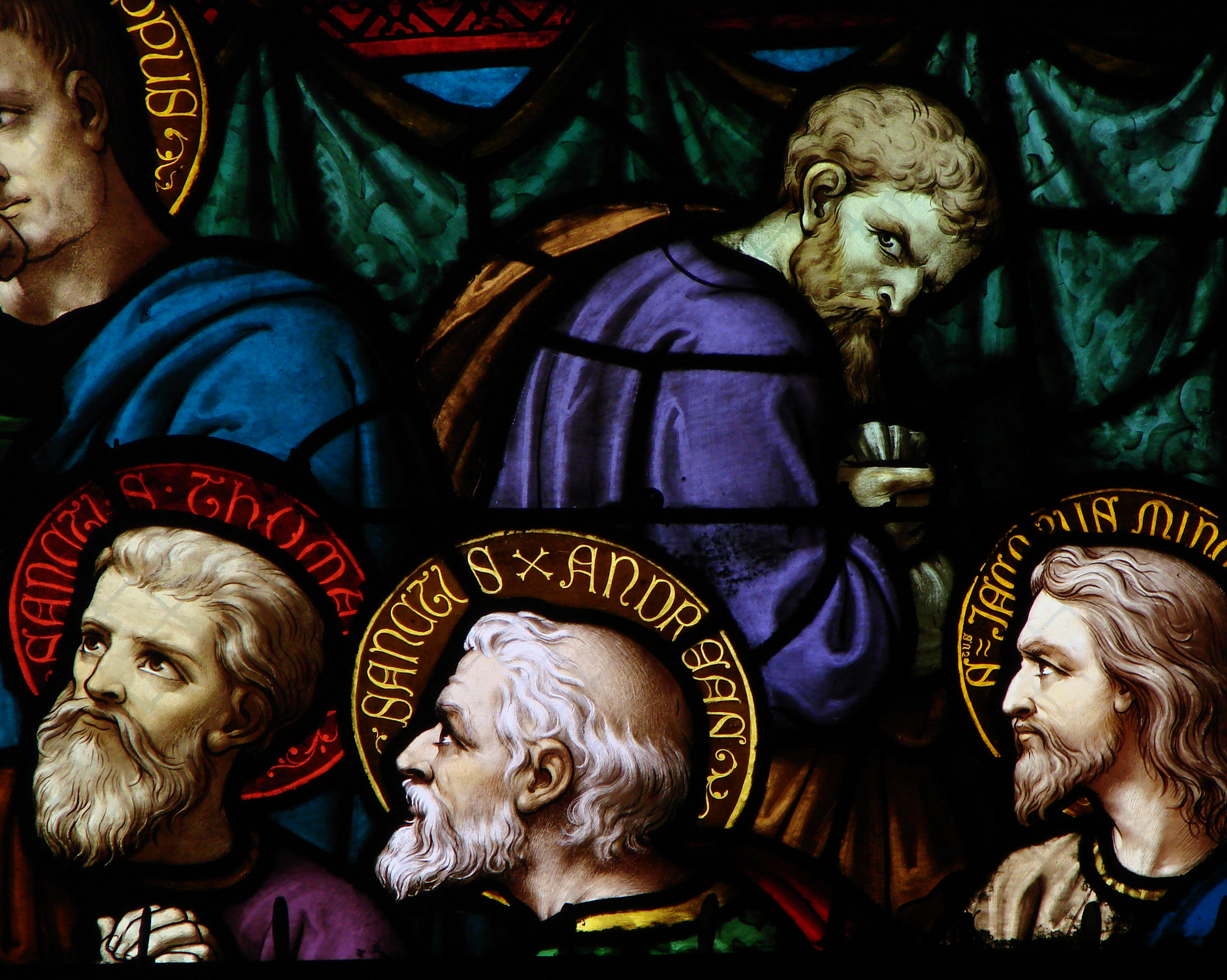
The Gospel reading for Mass today, Tuesday of Holy Week, shed a confirmatory light on this. As I listened, it caught me in an entirely new way:
Reclining at table with his disciples, Jesus was deeply troubled and testified, “Amen, amen, I say to you, one of you will betray me.”...After Judas took the morsel, Satan entered him. So Jesus said to him, “What you are going to do, do quickly.”...So Judas took the morsel and left at once. And it was night.
And it was night. Not just a statement about time of day, but a jarring statement about the state of the cosmos.
-------------------------
Nicodemus admitting at night that no one can work Jesus' works without God.
- John 3:2 This man [Nicodemus] came to Jesus by night and said to him, “Rabbi, we know that you are a teacher come from God; for no one can do these signs that you do, unless God is with him.” [emphasis added]
Jesus echoing his statement in John 9, that walking in the night is useless.
- John 11:10 But if any one walks in the night, he stumbles, because the light is not in him.
Nicodemus again coming "at night"--when Jesus had died--to prepare his body for burial.
- John 19:39 Nicodemus also, who had at first come to him by night, came bringing a mixture of myrrh and aloes, about a hundred pounds’ weight.
Peter and the other apostles unsuccessful in their work before seeing the Resurrected Christ (still in their night).
- John 21:3 Simon Peter said to them, “I am going fishing.” They said to him, “We will go with you.” They went out and got into the boat; but that night they caught nothing.
-------------------------
Of course, the liturgy of the Sacred Triduum leads us to this as well, from the darkness of the vigil kept after the Holy Thursday Mass of the Lord's Supper, through the striking absence of candles (except at veneration of the Cross and distribution of Communion) on Good Friday of the Lord's Passion, to the utter darkness at the beginning of the Easter Vigil in the Holy Night.
Thanks be to God that the light of Christ banishes the darkness to enlighten and empower us to work his works--into the Eternal Day!


 Posts


